
Key Takeaways
- Early movement generally outperforms prolonged rest or soft collar immobilization when it comes to reducing lingering neck pain after a crash.
- Roughly half of whiplash patients report ongoing symptoms a year later, which makes choosing the right recovery approach genuinely important.
- A smart recovery plan blends gentle range-of-motion work, deep neck flexor strengthening, postural retraining, and gradual return to activity.
- Passive treatments like massage, heat, or electrical stimulation feel good but work best as a supplement to active exercise, not a replacement.
- Home programs can be effective, but supervised care tends to produce better outcomes for moderate to severe cases.
- Progress should be measured in function, not just pain levels, including sleep quality, work capacity, and ability to drive comfortably.
- Psychological factors like fear of movement and crash-related anxiety often slow healing as much as the physical injury itself.
When a Rear-End Collision Leaves More Than a Dent
The jolt lasts less than a second. The consequences can last for months. Whiplash is one of those injuries that gets dismissed as minor until you try to turn your head to check a blind spot and feel like someone jammed a hot wire into your neck. The pain often arrives late too, sometimes a full day or two after the accident, which is why many people walk away from a fender bender thinking they got lucky.
They didn’t. Soft tissue damage, strained ligaments, and irritated facet joints don’t show up on standard X-rays, and they rarely heal on their own schedule. According to research published through the NCBI, about half of patients still deal with neck pain a full year after the injury. That is a sobering number, and it reframes whiplash from a nuisance into something worth taking seriously.
So what actually works? That is the real question. There are competing approaches, loud opinions, and plenty of outdated advice floating around. This article weighs the main options side by side so you can build a recovery plan that fits your situation rather than guessing.
Rest and Collars Versus Active Movement
For decades, the standard advice was simple: wear a soft foam collar, limit movement, let the tissue heal. It sounds intuitive. Protect the injury, right? The problem is that the research has steadily turned against this approach.
A study compared active exercise programs to collar-based treatment and found that exercise-based care produced better pain outcomes at both the six-week and six-month marks. Immobilizing the neck tends to encourage stiffness, weaken supporting muscles, and reinforce the brain’s fear of moving the area. Those three things together create a feedback loop that can turn a short-term injury into a chronic one.
Active movement, by contrast, keeps blood flowing to the healing tissue, prevents muscle atrophy, and teaches the nervous system that motion is safe. The catch is that “active” does not mean aggressive. The exercises used in early recovery are gentle, controlled, and progressive. Pushing too hard too fast creates its own problems. The sweet spot is somewhere between coddling the injury and bullying it, and a trained therapist is usually the best person to help you find that line.
What Does a Smart Recovery Program Actually Include?

A well-designed rehabilitation plan is not just a list of stretches. It is a layered program that addresses mobility, strength, posture, and the nervous system’s response to pain. The best physical therapy exercises for whiplash tend to combine several categories rather than drilling the same movement over and over. Think of it less like a workout routine and more like a carefully sequenced rebuild, where each layer prepares the tissue, joints, and nervous system for the next.
Most quality programs are built around four pillars: range of motion, motor control, strength and endurance, and sensorimotor retraining. Range of motion work restores how far your neck can move without guarding. Motor control re-teaches the deep stabilizing muscles to fire in the right order. Strength and endurance build the capacity to hold your head up through long days without flaring. And sensorimotor work — things like gaze stabilization and balance drills — retrains the connection between your neck, inner ear, and eyes, which is often disrupted after a crash.
A typical early-stage program might include:
- Gentle chin tucks to activate the deep neck flexor muscles, usually performed lying down first and then progressed to sitting or standing
- Slow, controlled rotations of the head within a comfortable range, often paired with slow breathing to avoid triggering a protective muscle response
- Shoulder blade squeezes to counteract the hunched posture that often follows a crash
- Isometric holds where you press lightly against your own hand without actually moving the neck, typically in all four directions: front, back, and both sides
- Scapular wall slides to restore upper back mobility and reconnect the shoulder girdle with the thoracic spine
- Diaphragmatic breathing to downregulate the stress response and reduce the chronic bracing that keeps the upper trapezius locked up
- Gentle cervical retraction glides to desensitize the joints and reinforce a neutral head position
As you progress, the program should get harder. That might mean adding resistance bands, longer isometric holds, light dumbbell work for the mid-back and rotator cuff, or more complex coordination drills such as head rotations while tracking a moving object with your eyes. Later stages often incorporate loaded carries, prone cobra holds, and even light plyometric or reactive drills for people returning to sport or physically demanding jobs. Many people stall out in recovery because they keep doing the same beginner exercises for weeks after their body has adapted, mistaking familiarity for safety. The exercises stop producing change because the tissue is no longer being challenged in a new way.
Progression matters. A good vehicular injury rehab plan treats the body like a system that needs continuous challenge, not a fragile object that needs permanent protection. The goal is not just to make the pain go away in the short term, but to build a neck and upper back that can tolerate the ordinary demands of life — driving, lifting a child, sitting at a desk, looking over your shoulder — without flaring up months or years down the road.
Home Programs or Supervised Care?
Here is where things get interesting. Can you recover on your own with a printout from the internet and some discipline? Sometimes yes. For mild cases, a self-directed program can absolutely work, especially if you are already active and body-aware. YouTube and reputable health sites have no shortage of guided routines.
But there are limits to the DIY approach. A therapist can palpate your neck, identify which specific joints are restricted, spot compensation patterns you cannot see in a mirror, and adjust your plan weekly based on how you are responding. They can also catch red flags that suggest something more serious, like nerve involvement or an undiagnosed structural issue. If you are curious about the broader timeline of healing and what else to expect while recovering from a crash, it helps to understand that neck symptoms are often just one piece of a larger picture.
When to Choose Hands-On Treatment
Supervised care becomes especially valuable if you have had symptoms longer than two or three weeks without improvement, if you experience numbness or tingling in the arms, if headaches have become a daily event, or if sleeping through the night has become impossible. These signs suggest the issue is not resolving on its own and that generic exercises may not target what you actually need. A hands-on evaluation can save weeks of trial and error.
Passive Therapies: Helpful Add-On or Expensive Distraction?
Massage, ultrasound, electrical stimulation, cupping, dry needling, heat packs, ice. The menu of passive treatments is long and sometimes overwhelming. The question is not whether they work. Many of them do provide short-term relief. The real question is whether they produce lasting change or just make you feel better for a few hours.
The honest answer is that passive treatments work best as a complement to active rehab, not a substitute. If a heat pack and some soft tissue work loosen you up enough to actually do your exercises with better quality, that is a win. If you are using them to avoid the harder work of strengthening and retraining movement, you are probably stalling your recovery.
Here is a quick comparison of common passive options and their realistic role:
- Massage therapy: good for reducing guarding and preparing muscles for exercise
- Dry needling: can help release trigger points that limit range of motion
- Electrical stimulation: useful for short-term pain control, especially early on
- Heat and cold: cheap, accessible, and effective for symptom management
- Ultrasound: evidence is mixed, benefits are often modest
Spending your entire recovery budget on passive care alone is one of the most common mistakes people make. It feels productive because something is being done to you, but the data consistently favors approaches where you are the active participant.
Measuring Progress Beyond Pain Levels
Pain is a terrible metric on its own. It fluctuates with sleep, stress, weather, and dozens of other factors that have nothing to do with how your tissue is actually healing. A smarter approach tracks functional milestones alongside pain.
Can you check your blind spot without pivoting your whole torso? Can you sit through a two-hour movie without needing to roll your neck constantly? Can you work a full day at a computer without a headache by lunch? These questions tell you more about real recovery than a one-to-ten pain score ever will.
The Journal of Orthopaedic and Sports Physical Therapy notes that roughly half of whiplash patients fully recover while the other half experience lasting disability or psychological effects. That split is striking. What separates the two groups is often not the severity of the initial injury but how the recovery is managed in the weeks that follow. People who stay engaged with their lives, maintain gentle activity, and address fear of movement early tend to land in the recovered half. People who withdraw, catastrophize, and wait passively for the pain to disappear often end up in the chronic group.
The Mental Side of Physical Recovery
Nobody likes being told their neck pain has a psychological component. It sounds dismissive, as if the injury is being blamed on the person suffering from it. That is not what the research is saying. What it is saying is that the brain’s interpretation of pain signals has a measurable effect on how long those signals persist.
Fear of re-injury, flashbacks from the crash, driving anxiety, and sleep disruption all amplify the nervous system’s pain response. A person who tenses their shoulders every time they get behind the wheel is reinforcing the same muscle patterns that are keeping their neck tight. Addressing the mental layer, whether through gradual exposure, breathing work, or counseling after a traumatic collision, often unlocks physical progress that was stuck for weeks.
Building Your Weekly Rehab Routine
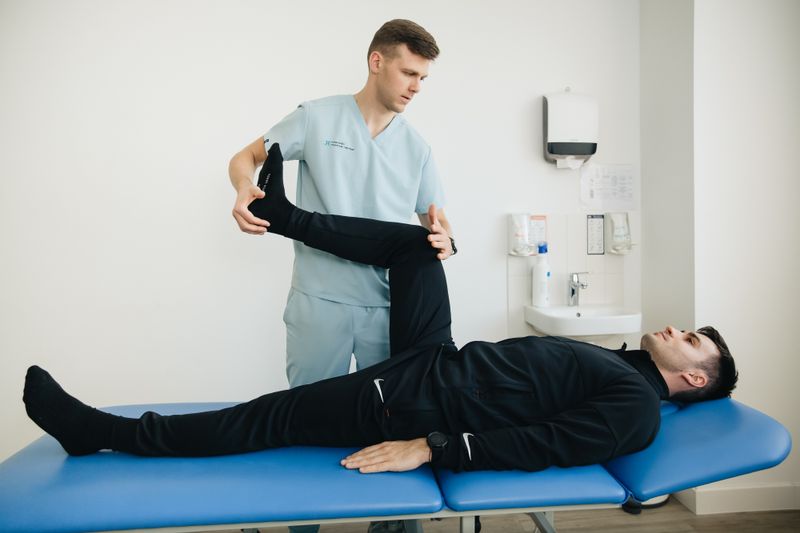
A realistic weekly structure usually looks something like this during the first month of recovery:
- Daily: five to ten minutes of gentle mobility work in the morning
- Three to four times per week: a longer strengthening session of twenty to thirty minutes
- One or two times per week: supervised therapy if available
- Daily: a short posture and breathing reset in the afternoon
- As needed: heat before exercise, ice after if swelling or soreness flares
Consistency matters more than intensity. Ten minutes done every day will outperform an hour done once a week. The tissue remodels in response to repeated, low-dose stimulus, not occasional heroic effort. Build the habit first, then worry about adding complexity.
Conclusion
Recovering from a whiplash injury is less about finding one magic exercise and more about layering the right habits in the right order. Early gentle movement beats prolonged rest. Active strengthening beats passive treatment alone. Functional milestones beat pain scores. And addressing the mental side of a crash beats pretending it does not exist. None of this is complicated, but all of it requires some patience and a willingness to keep showing up on the days when progress feels invisible.
If you are in the first weeks after a collision, start simple, stay consistent, and get a professional evaluation if symptoms are not steadily improving. If you are months out and still stuck, it is not too late to shift your approach. Many people assume chronic neck pain is just something they have to live with, when in reality a well-structured program can still produce meaningful change long after the initial injury window has closed.
The goal is not just to get out of pain. It is to get your life back, which includes driving without flinching, sleeping through the night, and turning your head without thinking about it. That kind of recovery is possible for most people, and it starts with the choices you make in the weeks right after the impact.